Posts

Showing posts with the label Climate Change

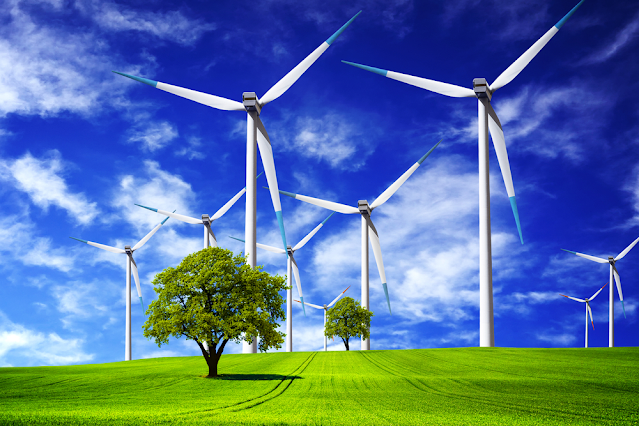
Technological Innovations That Could Save The Planet
Image
Every day, it seems that creative and forward-thinking people are responding to the rising demand for inventions that are both useful and ecologically conscious. Some products seem to be straight out of Black Mirror—with their sleek, modern designs—while others are still in their clunky trial stages. We’ve compiled a list of ten green creations that give us hope for the future of our planet. 1. The Ocean Cleanup 23-year-old boy genius, Boyan Slat, is the founder and president of The Ocean Cleanup, a foundation which is dedicated to developing advanced technologies to rid the oceans of plastic.  The Dutch inventor is in the works of creating a 62-mile underwater, V-shaped barrier to trap plastic trash as it floats along ocean currents. Slat said the technology, which he hopes to deploy by 2020, could remove half of the trash—amounting to 150 million pounds of trash—from the Great Pacific Garbage Patch within 10 years. Once removed, much of that plastic could be properly recycled. 2....

What Is Carbon Pricing And How It Is Implemented Around The World

Image
  What Is Carbon Pricing? The phrase put a price on carbon has now become well known with momentum growing among countries and business to put a price on carbon pollution as a means of bringing down emissions and drive investment into cleaner options. So what does it mean to put a price on carbon, and why do many government and business leaders support it? There are several paths governments can take to price carbon, all leading to the same result. They begin to capture what are known as the external costs of carbon emissions – costs that the public pays for in other ways, such as damage to crops and health care costs from heat waves and droughts or to property from flooding and sea level rise – and tie them to their sources through a price on carbon. A price on carbon helps shift the burden for the damage back to those who are responsible for it, and who can reduce it. Instead of dictating who should reduce emissions where and how, a carbon price gives an economic signal and pollu...

How Have Countries Around The World Responded To Climate Change

Image
  In 2016, nearly 200 countries signed up to the Paris climate accord, which set individual targets aimed at preventing global temperatures from rising above 2C this century – and to pursue efforts to limit the temperature increase even further to 1.5C or less. Despite such promises, many countries are still not on track. Some of the globe’s biggest emitters – the US and Russia – have either left or not yet ratified the treaty. As mass strikes united the globe in its fight against our climate crisis, we look at what some of the countries with the largest stake in our environment are either doing – or not doing – to save our planet. The US Since Donald Trump’s administration took office, the US president – who famously called climate change a “hoax” – has done plenty to reverse his predecessor Barack Obama’s pro-environmental policies. Mr Trump has often pursued the interests of industries such as coal and car manufacturing at the expense of the environment in his pursuit of jobs gr...

What Are Biggest Threats To Earth's Biodiversity

Image
  Climate change and air pollution has been a cause of major concern across the world as it is causing damage to the Earth's biodiversity. But according to the recent study conducted by the World Wildlife Fund's (WWF) Living Planet Report 2020, there is more than just climate change which is causing threat to the planet Earth. Here's a look at the five biggest threats to Earth’s biodiversity and the impact each has had globally. Climate Change Climate change is at that effects a 6 percent threat to the Earth's biodiversity.  Climate change includes both the global warming driven by human emissions of greenhouse gases, and the resulting large-scale shifts in weather patterns. Though there have been previous periods of climatic change, since the mid-20th century the rate of human impact on Earth's climate system and the global scale of that impact have been unprecedented. That human activity has caused climate change is not disputed by any scientific body of national ...

How Can Cities Reduce Their Carbon Emissions?

Image
  As it stands, the world’s cities account for roughly 70 percent of global carbon dioxide emissions. With urban populations expected to keep growing, cities’ exposure to climate change only looks likely to get worse — unless these population and business hubs can break away from a status quo defined by high greenhouse gas emissions. Fortunately, the emerging field of carbon dioxide removal offers hope. Carbon removal technologies, also known as "carbon negative" technologies, afford cities the opportunity to turn the current GHG emission paradigm on its head by enabling cities to subtract more GHGs from the atmosphere than they emit. Just imagine: the more that a carbon negative city emits, the greater positive environmental impact the city would have — assuming that its individual carbon removal systems can scale. In the process of becoming carbon “negative,” cities will gain opportunities to build sustainable foundations that enable continuous advances in health, prosperit...

What Are Ways To Fight Against Climate Change?

Image
  Healing the planet starts in your garage, in your kitchen, and at your dining-room table. Nations around the world are upping their game in the fight against climate change, even as President Trump recently announced the U.S.'s withdrawal from the Paris Agreement. And despite this reckless move, American mayors, state leaders, county officials, governors, major companies, and millions of citizens across our country have pledged that they're "still in" when it comes to the agreement, and supporting the goal of limiting future warming to well below 2 degrees Celsius. Even better, a new initiative by former New York City mayor Michael Bloomberg gives the urban layer of this movement a boost. He’s asked mayors from the 100 most populous cities in the country to share their plans for making their buildings and transportation systems run cleaner and more efficiently. The 20 that show the greatest potential for cutting the dangerous carbon pollution that’s driving climate ...

The Rapid Climate Change Can Have An Irreversible Effect On Our Planet, If We Don't Act Now!

Image
  The urgency of actions to recover from the COVID-19 crisis must not deter long-term climate objectives. The recovery efforts must seize the opportunity to increase the resilience of our society, especially to climate impacts. Despite the ambition of the Paris Agreement on Climate Change to keep global warming well below 2°C compared to pre-industrial temperatures, greenhouse gas (GHG) emissions worldwide are still growing. Global temperature is now over 1°C higher compared to the preindustrial era. If adequate mitigation strategies are not introduced, global warming could reach 3°C or more by the end of this century. The death toll from extreme heat could be 30 times higher and economic damages from flooding, drought and storms could be 15 times higher than today. The COVID-19 crisis will put a dent in the climate targets if the restoration efforts are focused on returning to a pre-crisis status quo. Now is the time to "rebuild better". This is the moment to introduce ambit...

Popular posts from this blog

Dalits Suffer The Most From India's Sexual Violence Crisis But Are Given the Least Protection

UK Universities Are Neglecting The International Students During The Pandemic

Lockdown Has Lead To Increase In Domestic Abuse All Over The World